What would The Price is Right be without games? See how many of the iconic–and infamous–games appeared in days gone by!
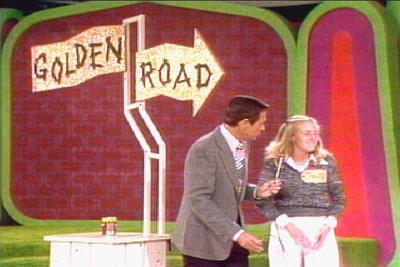
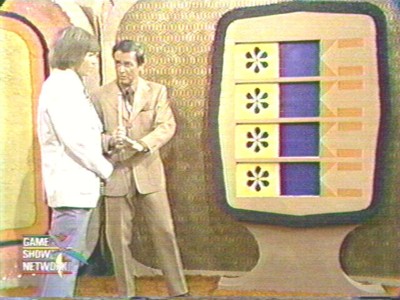
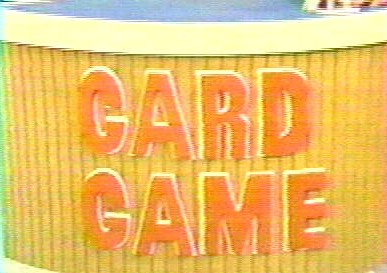
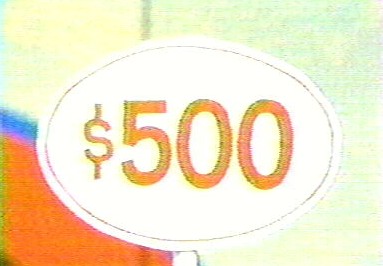
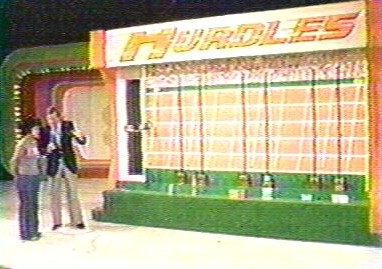
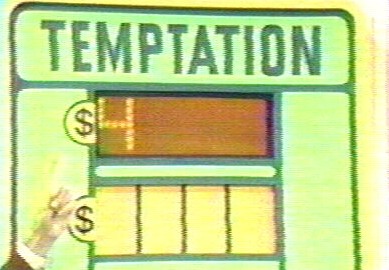
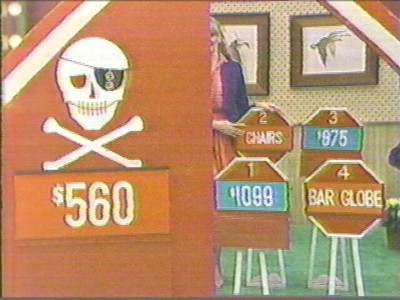
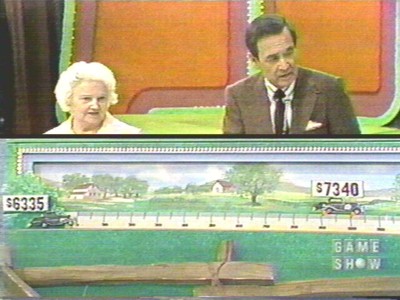
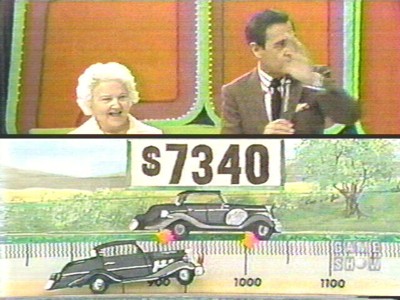
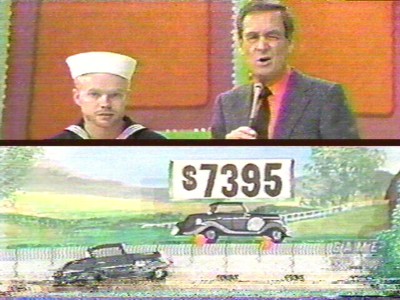
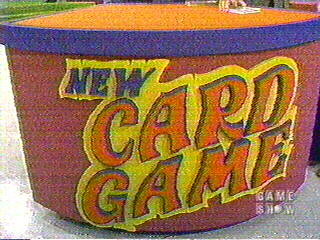
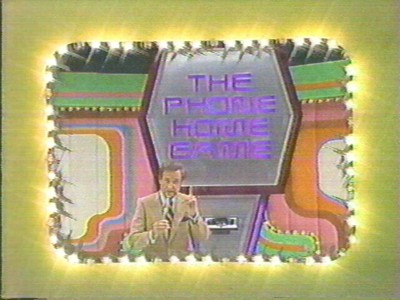
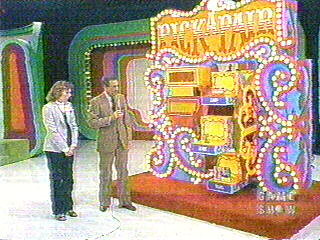
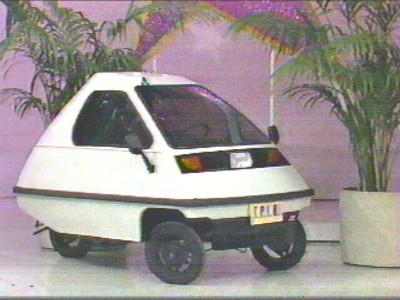
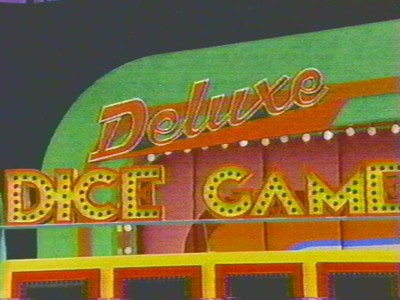
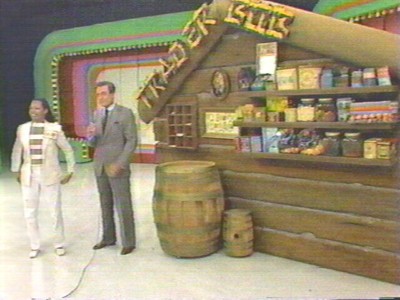
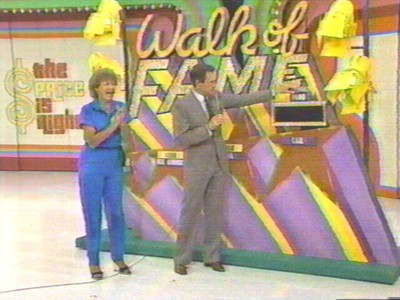
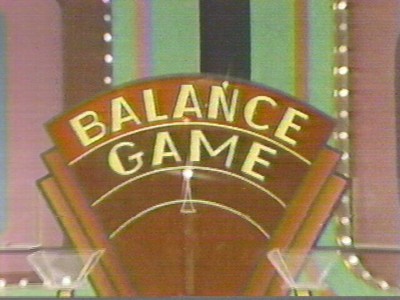
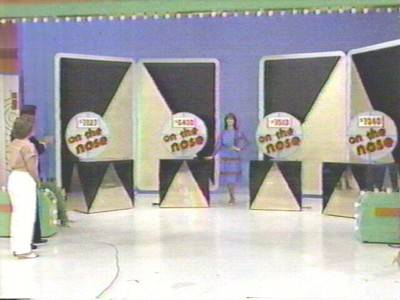
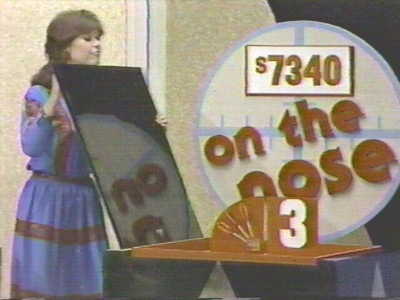
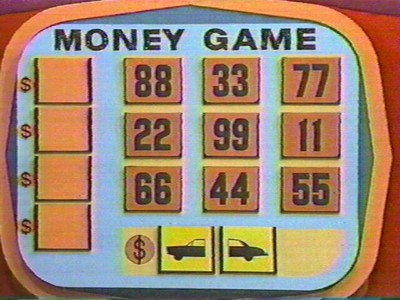
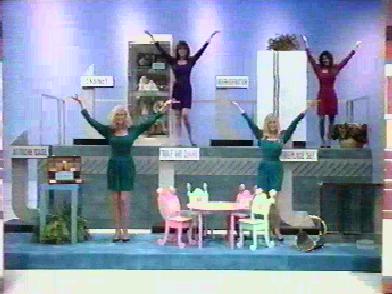
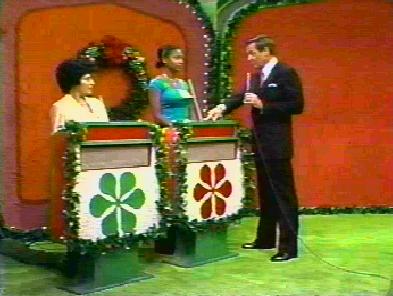
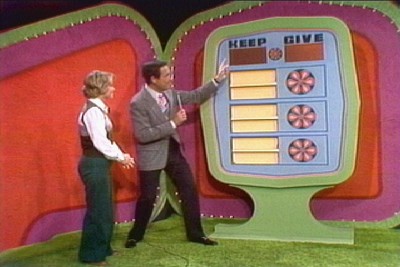
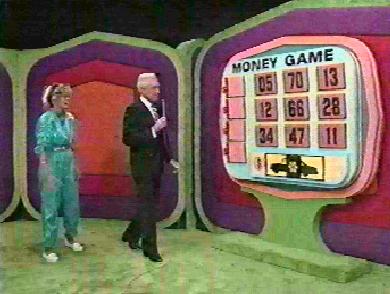
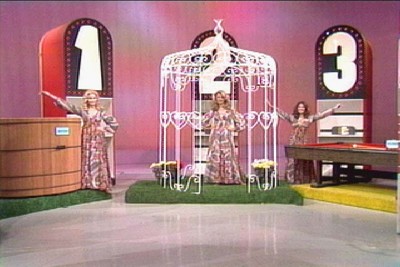
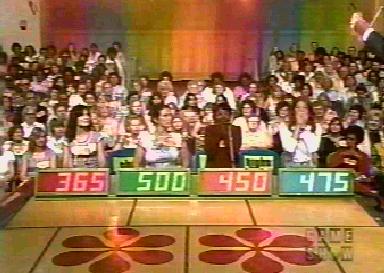
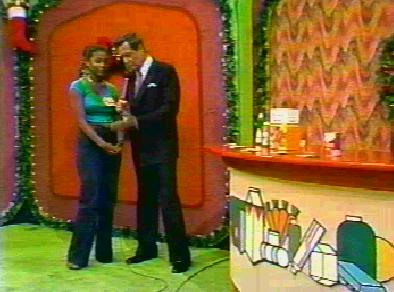
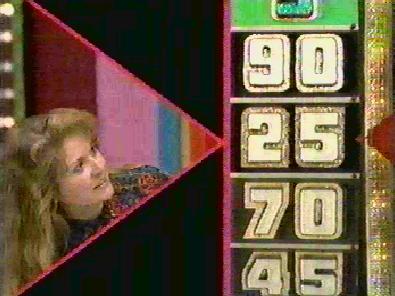
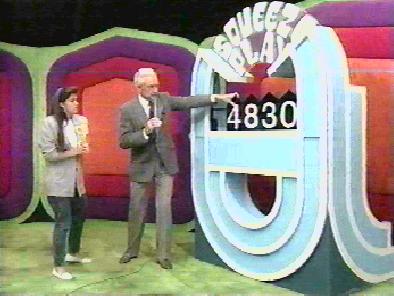
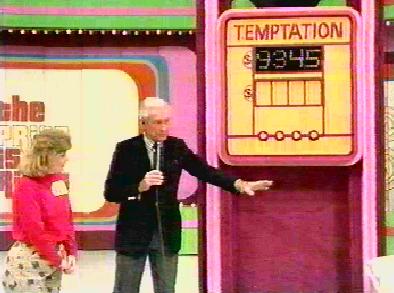
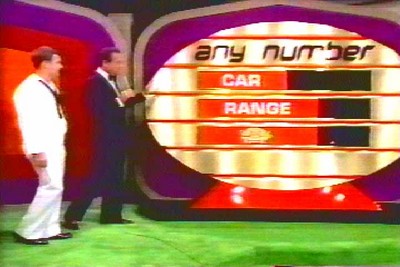
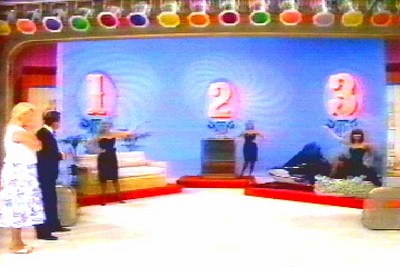
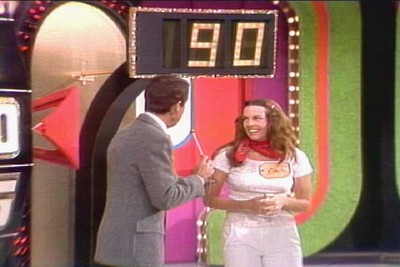
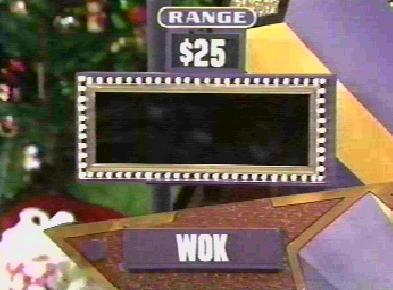
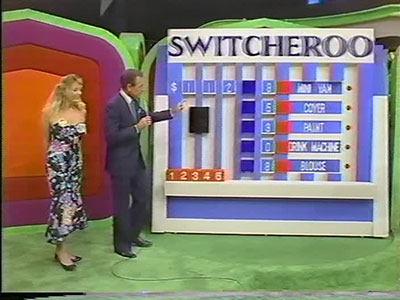
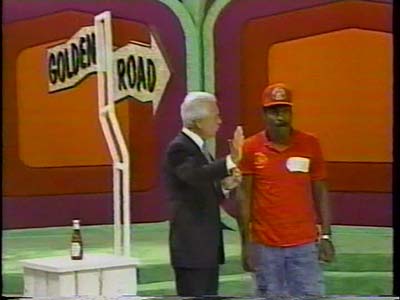
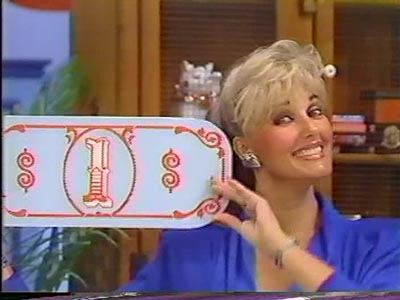
The first permanent hour-long show from October 1975 also saw the first winner in Golden Road.Bob hands a contestant the three pennies she’ll need to play ‘Penny Ante’ back in early 1986.No points for writing your guesses using the Gregg method. She’s wrong, anyway! (You should all know she’s wrong by now.)A graphic long since gone. This is how the contestant and the big wheel were displayed in one shot during the showcase showdown.An exciting finish to ‘Superball!’ The contestant landed the superball into the ‘win’ circle. A win with the superball was always exciting because the big doors would open one after the other as the audience cheered.Here’s the big wheel, with original pink dollar logo design and green sections, from early 1986.The ‘Phone Home Game’ involved a home contestant and an on stage player. Here, the contestant didn’t want to look at the amount Barker was about to reveal because she was afraid she’d missed the product that could have earned $10,000. Unfortunately, she was proven right. But in the end, the two players split $5,000.Before the greens and the metallics took hold, and well before the game was christened, the Bonus Game was a melange of tans and oranges with a black border. And it was played about every three days. The game is played less frequently now, but the board retains its now-classic look.The original Give or Keep board colorway. All the early game boards had a fixed frame design and different internal mechanisms, and varying depths depending on game mechanisms.Bonus Game, Give Or Keep, Any Number, Bullseye I, Clock Game, 2-Player Auction, and Double Digits (the first board to sport a game name) all had the same basic frame design. Money Game was an elongated variation, and Mystery Price was the first to debut a distinct design.This is the original design for Most Expensive, the first of the game’s three designs. If the signs look familiar, these are three of the four light stands used in the Five Price Tags game. A fourth price tag, not sporting a shelf for the price tag, was added for the 5PT game, and the 1-2-3 numbers were removable overlays. The bases with the red arrow motif were eventually redesigned, without shelves since Most Ex had gotten “dedicated” props.In the first couple of playings of Bullseye, a player could only try to hit the target with the hidden bullseye with the closest item to the target. In this playing, the game’s second, the one closest did not have the target behind it, and the one second closest did. The rules were later changed so that any target that hit the bullseye could still win the game.And the Bullseye range was originally $9 to $10, close to what it is today. That alone made the game harder when many prices of items were still 79 cents and 59 cents.The original game logo for Card Game.Yes, there was a time where 0s and numbers higher than 6 appeared in Dice Game. You young ‘uns have it easy now. 😛Here’s the 1st $500 marker in Hole In One.Bob stands next to the original Hi-Lo table.TPIR’s answer to the Penn Relays, Hurdles. You may be able to see that something’s up for this play of the game.Here’s the TPIR Hurdler Guy, ready to run the race as long as the stage player picks all 3 prizes lower than 69 cents.As shown in the first Hurdles picture, one of the price signs that flips down when the Hurdler Guy passes it has already been flipped, the 49 cents for Salad Crunchies. Bob had a lot of fun with this blooper, asking the player “Now, one of these products is less than 69 cents! I want you to think about this carefully now!”To the strains of Rossini’s “William Tell Overture”, the race is run. Bob puts extra drama on the second leg. “Will the hurdler get over this hurdle?” The contestant is smiling because he will, and smiled again when she won, thanks to a faulty prop.The Range Game board started as a blue and white-colored board, but in 1976 it was repainted to better complement the green stage trappings. Take note of how high the price is…if the player let the range go all the way up, she would have won.Here’s the original Safe Crackers design.The original Temptation board was varied shades of green.This weed eventually got plucked in favor of a $500 flag.Here’s the good ol’ days of Money Game, where it was played center stage behind the giant price tag……along with an excellent camera shot as the car was revealed!The Giant Price Tag has undergone several designs over the years. Here’s the “modern” look used in the mid-1980’s.Remember that scary-lookin’ skull who was the unofficial mascot for “Danger Price”?In the early days of the Grand Game, the Giant Price Tag would be all the way down, meaning the top of the sign could be seen in the opening shot. They now routinely keep the price tag about a foot off the ground when the game is played, plus they use a different opening shot so the surprise isn’t spoiled for the home audience.Lucky Seven as it appeared in 1982.Johnny says you can win “TWO NEW CARS!” What’s the game?It’s Optional! The first regular game to offer more than one car as a grand prize!The board held anywhere from eight to ten options, a price generally around $1000, and an option limit (usually between three and five).All the player had to do was pick options that would bring the price of the lower priced car (the base model) up to within $100 of the price of the higher priced car, without going over. The car would move along the number scale and the background behind it was on an endless loop, and it would scroll in the opposite direction. As the car was moving a sound not unlike that of Jack Benny’s old Maxwell would play in the background.After the car moved the price of each option, Bob would show its price. He also manipulated the buttons to turn on the light to show what was picked.This contestant has successfully played the game, winning both cars by judicious picking of options.But it wasn’t as easy as picking air conditioning and power steering every time…this sailor was stymied by the price of a heavy-duty battery and he fell short by about $80.Here is Squeeze Play out in the middle of the stage. Its original colorway was a very classy blue and white scheme.This oughta be good. The doors aren’t open all the way and the sign’s out.It’s the new Card Game! The big change is that aces can now represent any amount and can be used at any time. And there’s an opening bid of $2000.Oops! Our next game will be called “Fire That Production Assistant!” This on-air blooper led to the contestant winning a $17,000 motor home in 1983.Bob reminds us to watch the show next week for the premiere of The Phone Home Game.Round and round the prizes go! Where they stop — nobody knows! The original ferris-wheel staging for “Pick-a-Pair”!EEEEEWWW! This horrific looking set of wheels was offered at the end of the Walk of Fame.And for you logo freaks, here’s another of TPIR’s five-digit expansions, Deluxe Dice Game.One of the numerous prize backdrops used on Give or Keep behind a Presto Fry Daddy deep fryer.Can the phone player bring the on stage player up to $7500 cash?The TPIR general store is open for business in the classy, rustic set for Trader Bob, a game which unwittingly spawned the more recent Step Up.Walk of Fame! The contestant is going to play for a butt-ugly electric car! (They did also play for real cars as well in this game, so it was quite disappointing when an electric job came up.)Here’s the Balance Game, one of the toughest games to win in the 1980’s.The game was shielded on stage by the large sign, and there were two dollar sign travelers on either side of the scale. The rightmost one rolled away to reveal the game’s five small prizes.Janice waits for the first contestant pick. She’ll then dump the Barker Dollars into whichever half of the scale the player indicates.This player played it very cool. She picked a $45 prize for one side of the scale, and then a $30 and a $15 prize for the other side, and balanced the scale perfectly! (You could be within $5 either way and still balance the scale.)Here’s Now…AND Then, as seen in 1984.TPIR’s mini-Olympics is set to be played again. It’s On the Nose!Here’s the four price stations. The right price to the car gives your four chances to hit the target (and $1000), and then down to the furthest price for one try.Close, but not close enough. There are three chances to win the car, and the game will be the dart balloon pop.The OTN game prop featured chase lights and neon sports figures inspired by Olympic event graphics. Nice lookin’ set! This was the game’s fourth playing, with the previous three being basketball shoot, softball throw, and football pass.Barker gives the player another dart.And here’s the special five digit version of 3 Strikes.Clock Game is being played by two people: a contestant at home will also win the same prizes the on stage woman wins in the game. Note the side-by-side staging of the Play Along stand and the Clock Game board.December 1986: The game’s the same, but the name’s new. “This is an all new game,” says Bob, “because it really is ‘now or then’.” The price can’t very well be both now AND then, now, can it?Add Em Up, a short lived but intriguing number logic game, was played for about four years in the 1980’s.The game board featured slots for the four digits in the price of the car, the ten digits 0-9, and a total square which was the sum of the car price’s four digits. There were also two two-digit displays (the 7-segment reflective flip type as in Check-Out) for the sum totals so far.The Add ‘Em Up price prop originally had the Add ‘Em Up logo on top, but it was subsequently removed when the game Pathfinder premiered, since the price display was also used on that game.Spelling Bee makes its first appearance in September 1988. The only change the staging of this game has had was the addition of the frequency chart (11 C’s, 11 A’s, 6 R’s, 2 CAR’s). The yellow and black honeycomb scheme endures today — and it’s a very sharp look.1989: The Squeeze Play board has a little extra zip to it today. Bob explains that the motor that operates the board burned out, and Andy (Felsher?) is behind the board operating it manually. Since that point, rather than fix the motor, they’ve always had a person manipulating the numbers. Notice too that the center panel below the price area is not there…you could actually see Andy’s legs in the shot!Here’s a dirty trick! Instead of the usual number distribution with three potential first half numbers, they used each double-digit pair other than 00! And yes, on occasion they have used 00!Get your pencils, pens and markers out! It’s time for the Gallery Game!Here is the first set-up for ‘Any Number’ in the familiar original shape. This playing is from 1975.Bob pretty much says it here. “The more I explain it, the more difficult it’s going to sound.”Check out this unusual Bump prize reveal from 1990!Years ago, when Bob would pitch to a commercial from the turntable, he’d position himself in front of the turntable itself and we’d see the game being spun away. The clock in the “Clock Game” would reset as it spun around. Here’s Janice and the “Grocery Game” going bye-bye in the background.There seems to be a problem with staging in this shot. Janice and her podium is practically in front of the Buy or Sell scoreboard. She doesn’t seem to mind being the center of attention!For a very brief time early in it’s tenure on the show, Buy or Sell’s game board was placed on top of a giant purple base!Here is a wide shot of all four models showing off “a wonderful array of prizes” during the Credit Card game.In this playing of Credit Card, a malfunction causes all of the markers to rise, revealing the correct answers as well as the incorrect ones.A painful Check Game loss, losing by only $12! Janice is in the process of voiding the check.Christmas showcase podiums from 1982. Garland abound!The original setup for the Danger Price game, located behind door number 3. Take note of the giant clocks on the right and the “globe bar” on the left!Dian can’t get the cookware price to reveal during this 1990 playing of Danger Price. Janice just looks on, not offering any help to the troubled Dian!A very old version of the Dice Game. The contestant is playing for a $6,000 Chevy Chevette!Long before the ‘Magic Red Curtain,’ there was the ‘Magic Gold Curtain!’ The curtain isn’t normally seen on camera, but this time, it was used to reveal the Poker Game.Those are REALLY cheap slacks! Actually, the readout malfunctioned and Bob had to ask the staff what the retail price was.‘Give or Keep’ was a popular game in the early years of the show. Here was its mid-70’s set up.Here comes Money Game on the turntable. However there is something different about this version……It’s 5 digit Money Game! No, it’s not Big Money Game, either. Big Money game provided contestants with the last digit. This is a rarer version that used the old style of game board but gave contestants the middle number as it is presented today.The second set of ‘Most Expensive’ pylons were rounded with bold numbers. As you can see on Pylon #3, the original designs also held the price signs as today’s “antique” neon versions do.The old glitter-laden “gold star” curtain. This curtain was replaced by the “color shapes and dollar signs” curtain that is still used today.The old Price is Right logo, circa 1990.Here is a picture of the old style flooring in front of contestant’s row from the late 1970s.A past playing of the Grocery Game. Since the turntable was decorated for Christmas, there was no room for the Grocery Game sign. Bob is seen here explaining to the audience that the contestant was “estimating the total price by writing them on her hand with her finger!”This is the 1990s version of the Plinko board. In this episode, the Plinko chip gets stuck on the peg above the $1,000 slot. The Plinko board was eventually redesigned, possibly because of recurring incidents such as this one.Another version the Showcase Showdown “arrow” graphic, used in 1990.Here’s Bob manually operating a broken Squeeze Play. He took out the number for the contestant… and nothing happened. We are pretty sure he wanted to kick it, but he just pushed the numbers aside instead!Play Along was a short-lived home viewer game where a home viewer won whatever the contestant won in their pricing game.In the past, a shot of the Showcase winner’s total was shown during the credit roll. This process has been replaced by a flashing graphic before Bob reminds everyone to have their pets spayed or neutered. This photo was taken from a 1980’s Christmas episode.Four digit Temptation, before it was converted to five digit Temptation (thanks to inflation!).A blooper win on “Range Game.” The contestant pressed the STOP button, but the rangefinder didn’t stop. They moved the rangefinder back, but when she didn’t win, Bob awarded her the prize anyway, joking that everyone at home would say, “Barker, you’re a bum!” if he didn’t give her the prize.The stylized title that introduced the Grand Game in the 1980’s.Check out the pink border around contestant’s row from this syndicated nighttime episode from 1985. This border was also used in the daytime version.“Any Number’s” current set-up premiered during the 1986 Prime time specials.When a pricing game was played near the big doors in the 1986 Prime time specials, they would dim the spotlights around the doors so that they wouldn’t interfere with the camera shots.Here’s a shot of Bob explaining the rules to “Most Expensive.” This shot gives you a good view of the gridwork for the spotlights.A nice shot of the original Showcase Showdown scoreboard as Barker walks the first contestant to her place. It is speculated that the scoreboard was redone to prevent so many contestants from hitting their head on the old design.The clam is a clever way to conceal an item up for bids. This is an early design of the clam’s exterior with the show logo from 1975.Don’t touch those “Shell Game” chips until Bob tells you to!From the first permanent hour long show in 1975, here is Bob explaining the rules of the showcase. It’s interesting to note that in this show, the big winner got the podium with the green asterisk instead of the red. Eventually, the red asterisk was placed in front of the big winner.This is always a happy sight in “Shell Game!” The contestant has guaranteed herself a win by getting a chip in front of each shell.Bob sweetens the pot by offering a $500 bonus if she can guess which shell is concealing the ball.Back in the early 1980s, nothing was placed on the floor in front of the big wheel. This blank space was soon replaced by two red circles, one for the spinner and one for the contestant in the lead. In 1994, this was replaced by the carpet from Doug Davidson’s version of the show. Nowadays, a wider red and yellow carpet covers this spot.Bob tells the contestant she stopped on a nickel and that she needed to spin again. Hold on there! Bob finally realizes that the “9” fell off the side of the big wheel and the contestant wins with 95 cents!Bob introduces America to the Big Wheel in the first permanent hour-long show from 1975. There were no green sections and no “bonus” spin — only a $1,000 bonus for getting $1.00 in one or two spins.It’s “Wok” of Fame! Terrible joke, we know. We couldn’t resist!One of the very first instances of Switcheroo being played for a 5-digit car!This contestant from 1988 is about to walk the Golden Road – our namesake game!The actual retail price is….A big winner in the Dice Game, ca. early 80s Price!













































 Golden-Gallery.net