Reimagining The Price is Right
A good show can only be kept down for so long. After about a half decade off the air, Mark Goodson began developing a revival. The original idea was to redo Bill Cullen’s show as a once-a-week syndicated show, but what began as a simple revival quickly spiraled into something far greater.

When CBS’ new VP of daytime programming found out Goodson was developing a revival, he asked Goodson to develop a daytime version of The Price is Right as well. Both of CBS’ rival networks had recently found new hit daytime game shows in “Password” and “Let’s Make a Deal”, and CBS wanted to boost their flagging daytime lineup with a hit game show of their own.
Brighter, Faster, Flashier
Goodson quickly realized a major problem with this plan: times had changed. The original format of The Price is Right was far too slow-paced for the 1970’s television landscape, especially compared to the new crop of game shows. TPIR would need to be retooled drastically if it was to be a hit. With help of a half-dozen other creative producers, Goodson’s braintrust held brainstorming sessions around the pool of the Beverly Hills Hotel and created new games based on the pricing of merchandise.

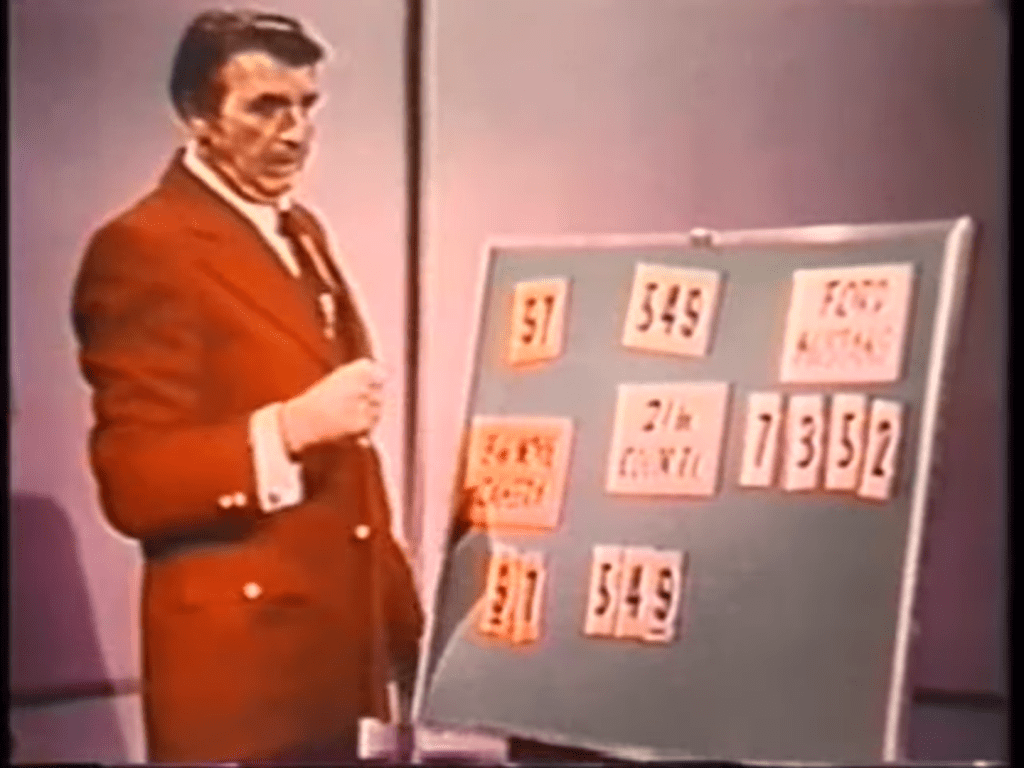
Inspired by the success of rival company’s “Let’s Make a Deal”, which saw its host approach members of the studio audience, the New Price is Right would call surprised audience members to “Come on Down” to their bidding podiums. Rather than a series of bids, contestants would be afforded just one bid each, and each round’s winner would earn the right to come onstage and play one of an ever-changing lineup of pricing games. The two highest winners of the day would compete in a bonus “showcase” round at the end of the show.
The Stars of the New Price Is Right


Original host Bill Cullen was big part of what made the original version work, but his star had risen too high–he currently was hosting three shows based out of New York and wasn’t able to commute to the California-based show.
Will Bill Cullen unavailable, Goodson tapped Dennis James, a TV veteran with over 25 years of experience in front of a camera, and regular guest host on “Let’s Make a Deal”.
Dennis James agreed to host the new format, and was given a five-year contract hosting The New Price is Right as a once-a-week nighttime version. However, that syndicated version was sold to air on NBC’s owned & operated stations, and CBS didn’t want an “NBC personality” hosting a CBS show. Instead, CBS pushed Goodson to hire 48-year-old “Truth or Consequences” host Bob Barker for their daytime version.
Bob had a gifted talent for bringing the best out of everyday people, which is exactly what the new version called for. Bob’s syndicated “Truth or Consequences” contract had no stipulations against him hosting a daytime show. Bob initially was reluctant, but after some flattering agreed to do the new show.
Season 1 – Sep 1972 to Sep 1973
| Vietnam War ends… | Chevy Nova: $2,761 |
| World Trade Center opens… | Color TV: $500 |
| Stock market crashes… | Muskrat Fur Coat: $595 |
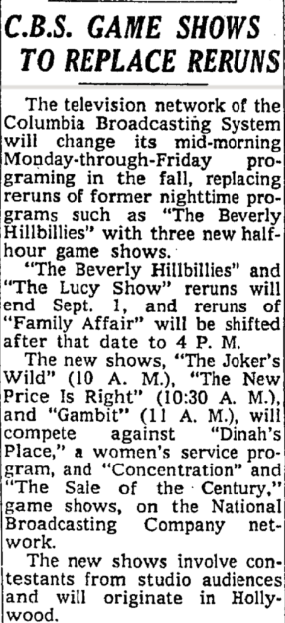
CBS premiered The New Price is Right at 10:30 AM ET as part of their new 90 minute game show block in between The Joker’s Wild and Gambit on September 4, 1972. Their readventure into game shows paid off, and all three shows became hits.
The New Price is Right hit the ground running from day 1. Bob knew how to work contestants, the new format kept the show moving, and the variety of games and prizes meant you truly never knew what was going to happen next.
That’s not to say that the new show arrived fully formed. Like with any new production, Price’s first 13 weeks were a growing period. Audiences used to other shows arrived on their best behavior, dressed up in their Sunday best, reluctant to shout prices or break decorum. You can see technicians setting up games and audio errors as the production staff worked out the best ways to capture all of the unscripted happenings onstage. A technicians’ strike plagued two months of episodes with shoddy camerawork. Some games that worked well in rehearsal didn’t work well at all in practice, and were quickly retired.
But major kinks in the show’s production were quickly worked out. Price eventually built to a stable library of thirteen games. The audience warmed up to the idea of yelling advice to the contestants. And Bob always knew how to have fun onstage! At long last, CBS had found the daytime hit they were looking for.
It success spurred CBS to greenlight other game shows to fill the gaps left by the “rural purge” of the early 70s. It wasn’t long before Price was plucked from its morning block and moved to 3PM in an attempt to use its strong ratings to start an afternoon game show block. “Match Game ’73” soon became another CBS hit enjoying a long run thanks to TPIR’s strong lead-in.
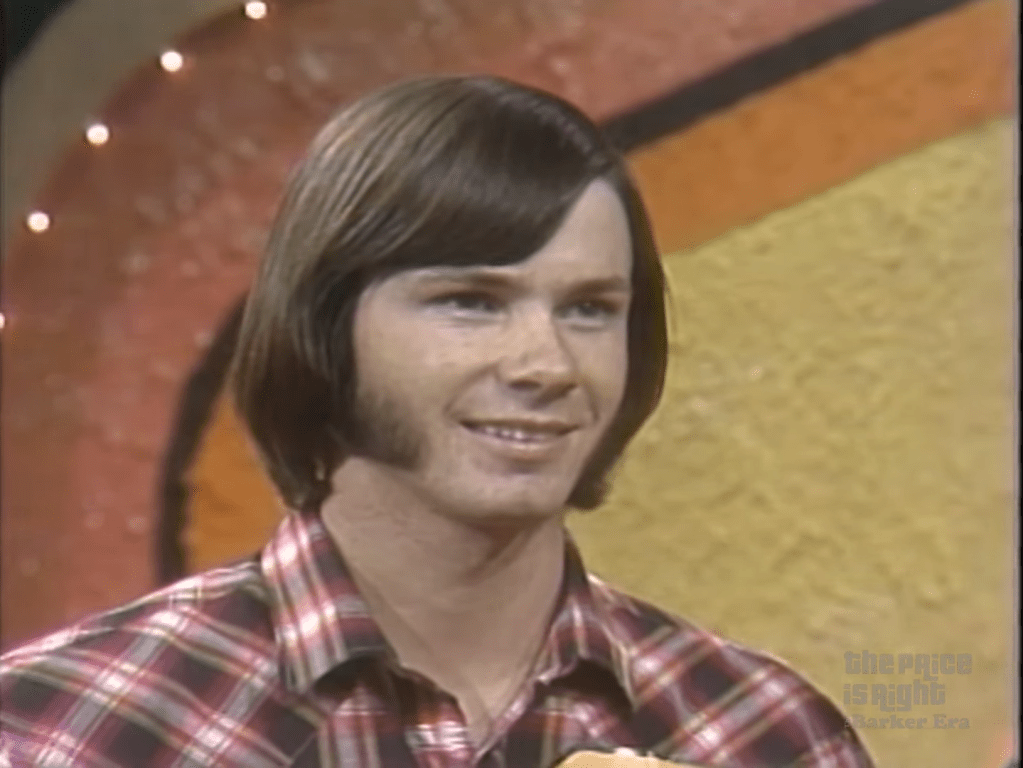
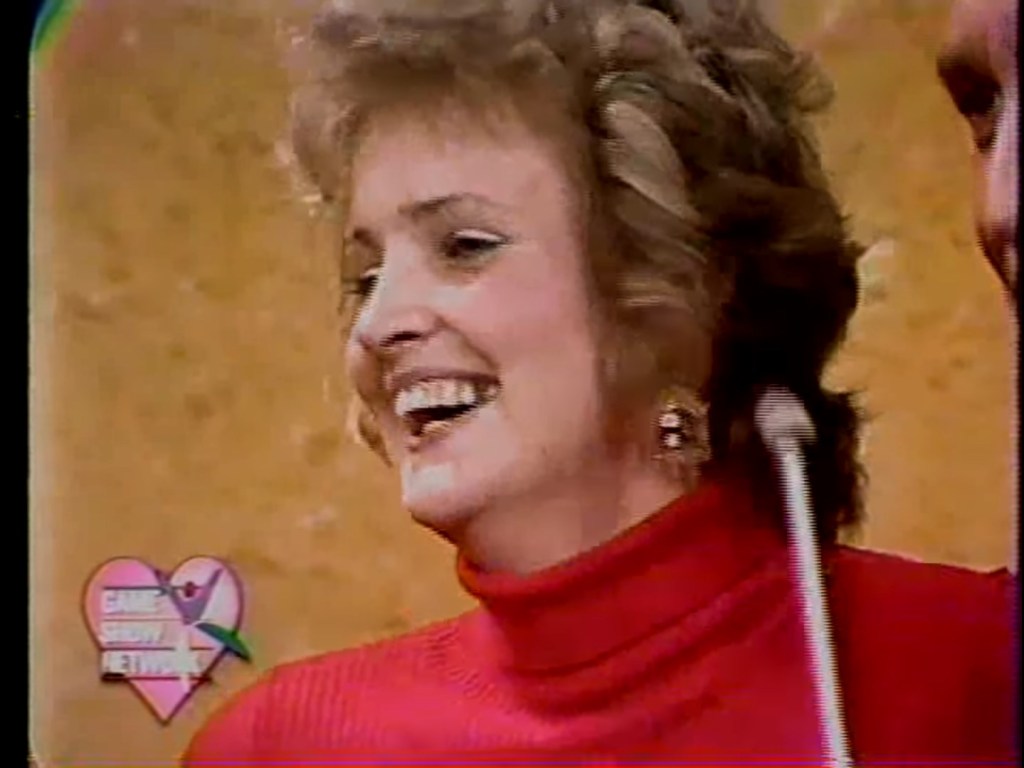
Contestant Hall of Fame


Memorable Moments
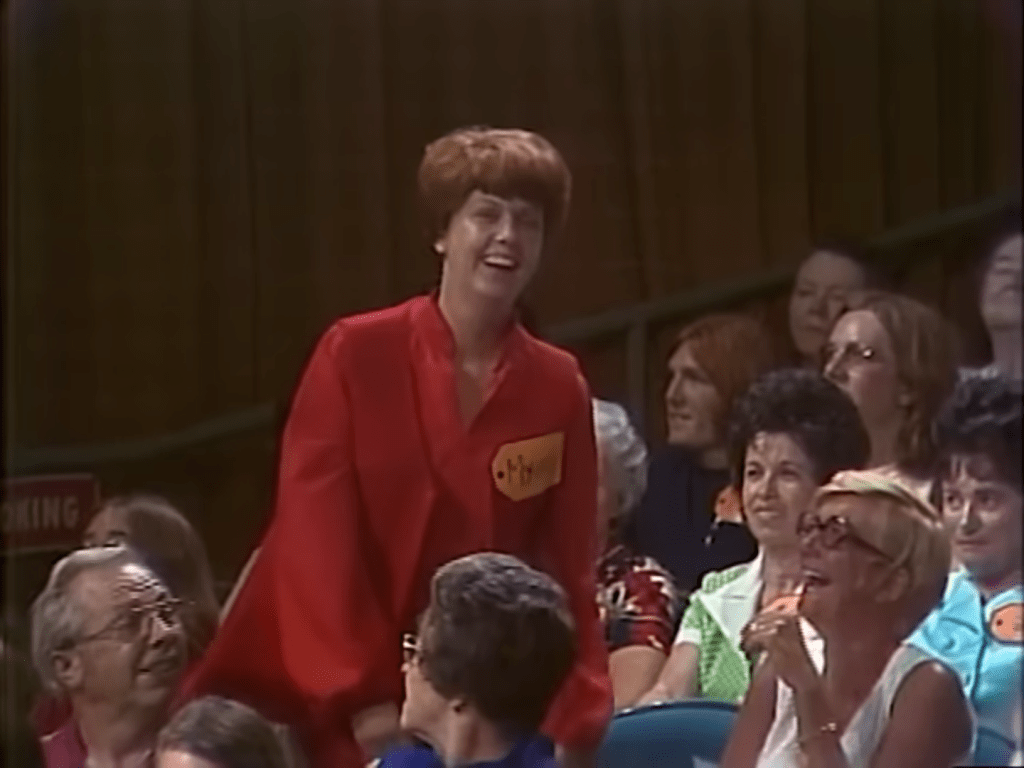
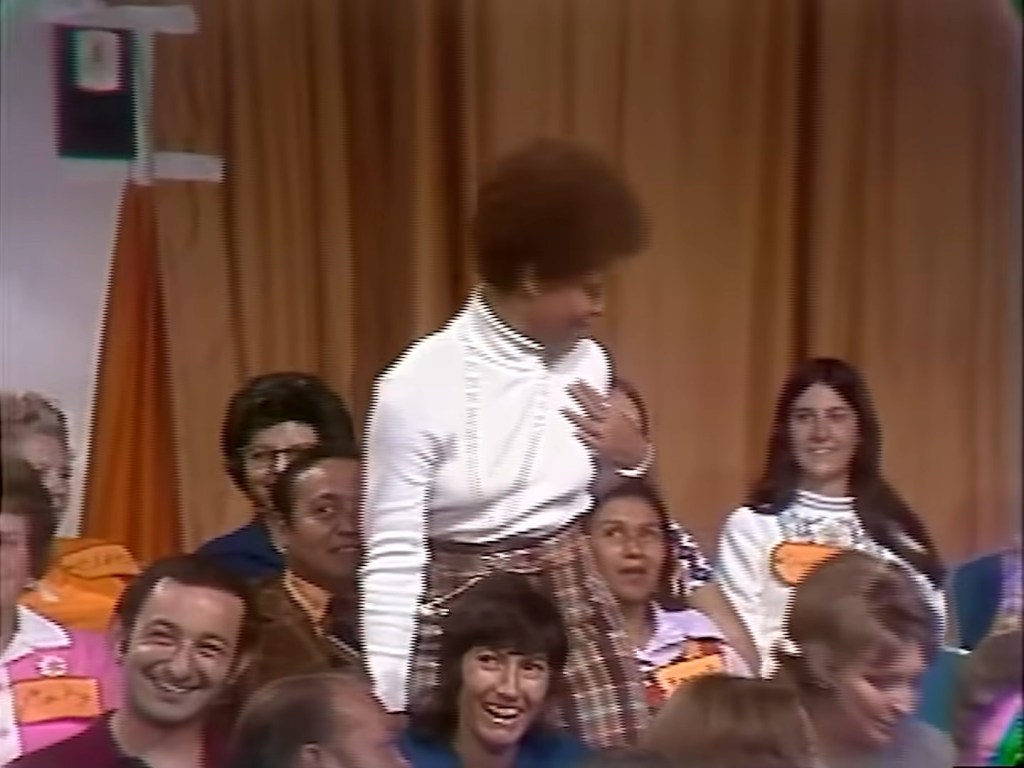
The first four contestants were originally told to “Stand Up!” before coming on down. This changed to the familiar “Come On Down!” after the first week of shows. 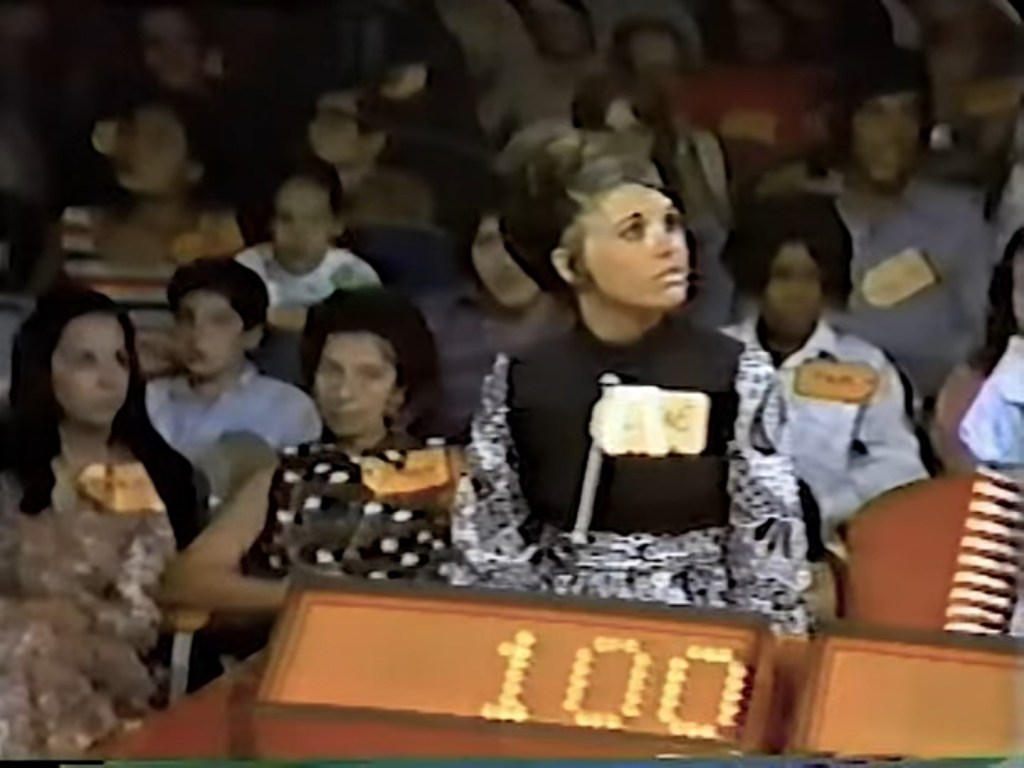
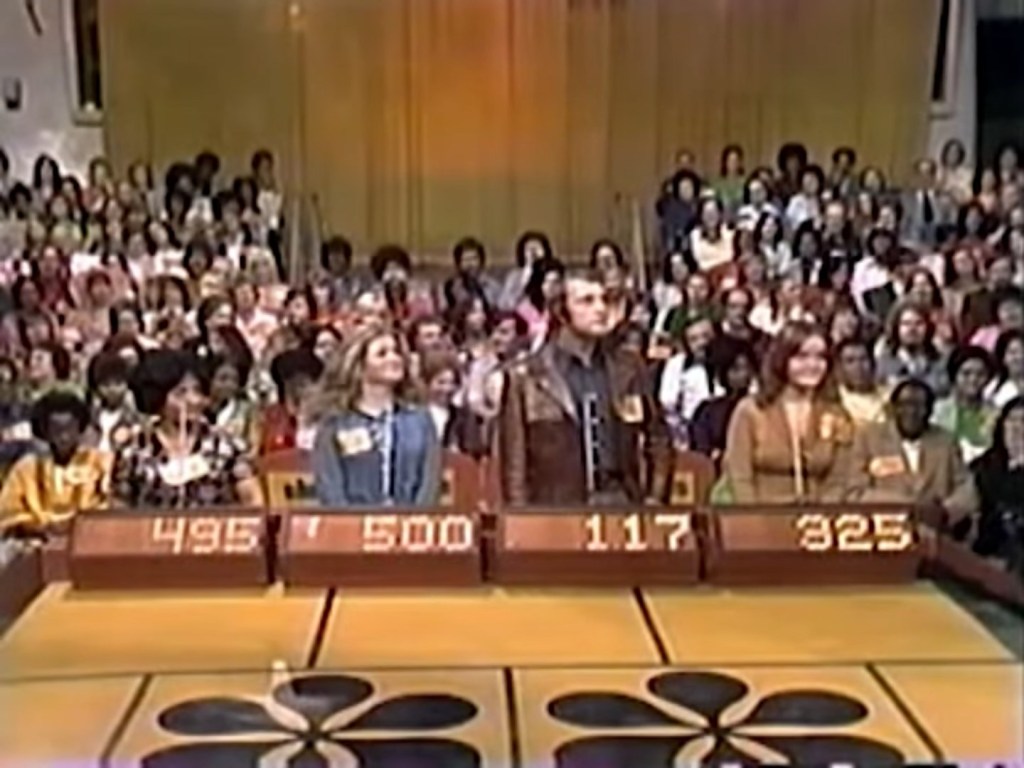
Bidding originally proceeded from the leftmost podium to rightmost podium, ALWAYS, no matter who had just won. This was quickly changed to the newest contestant in the row placing the first bid. 
Paul, the first showcase winner, was only $4 off! 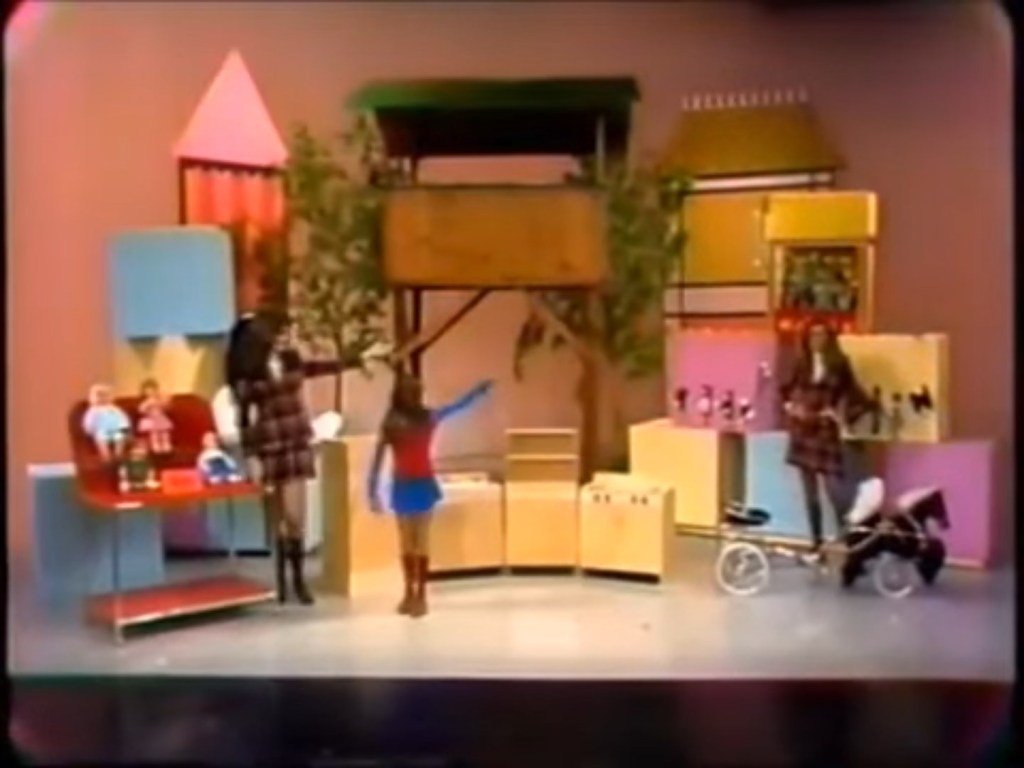
Janice Pennington and Anitra Ford were the original models. Anitra’s daughter Erin helps her mother model a toy room. 
The first ever Item Up For Bids? A $595 fur coat! In later years Bob disallowed animal-based prizes from being used. 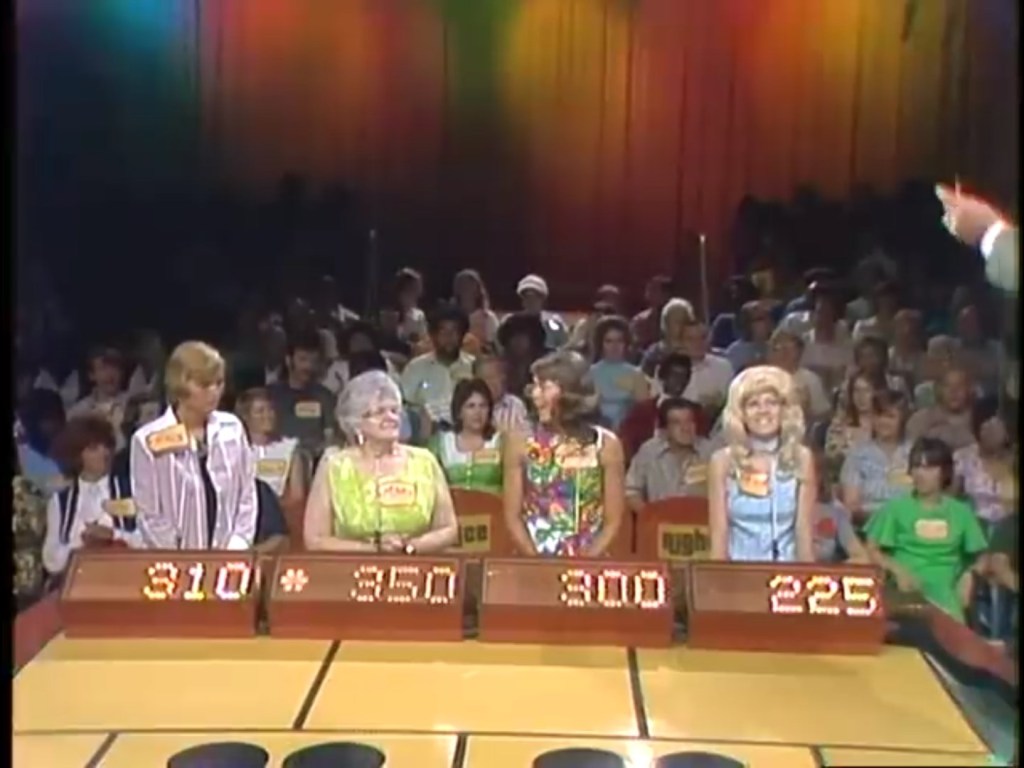
The original Contestants’ Row podiums were brown, and the winner was marked by an asterisk. 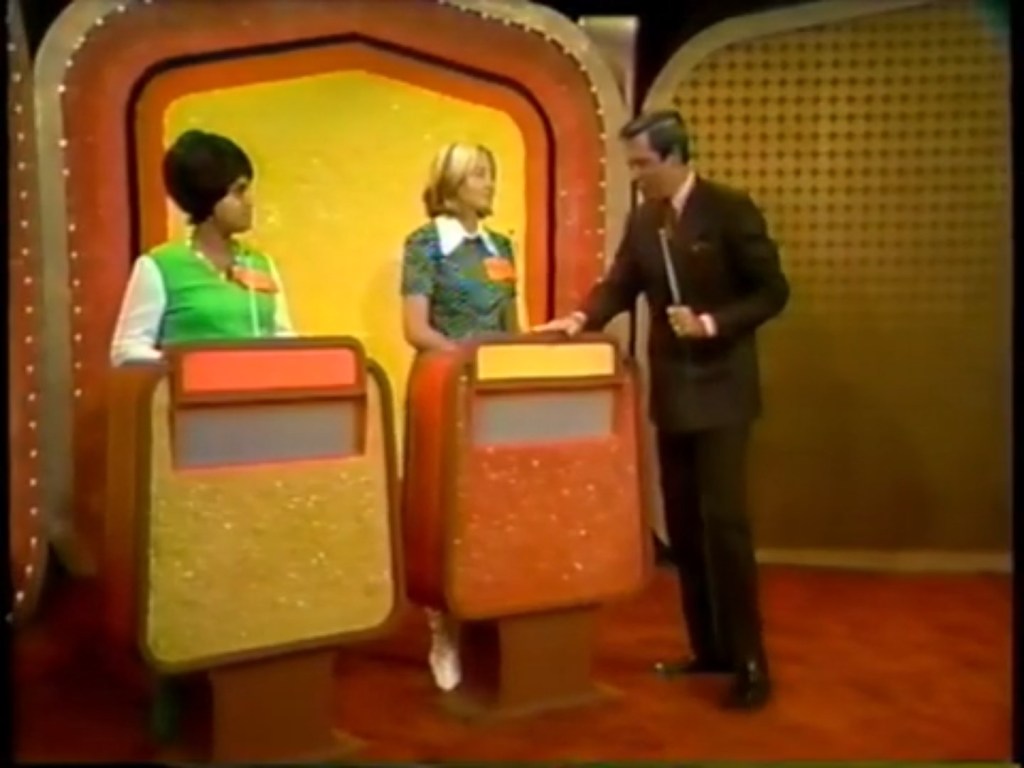
There was no Big Wheel in the half hour version. Only three games were played, and the top two winners automatically advanced to the showcase. 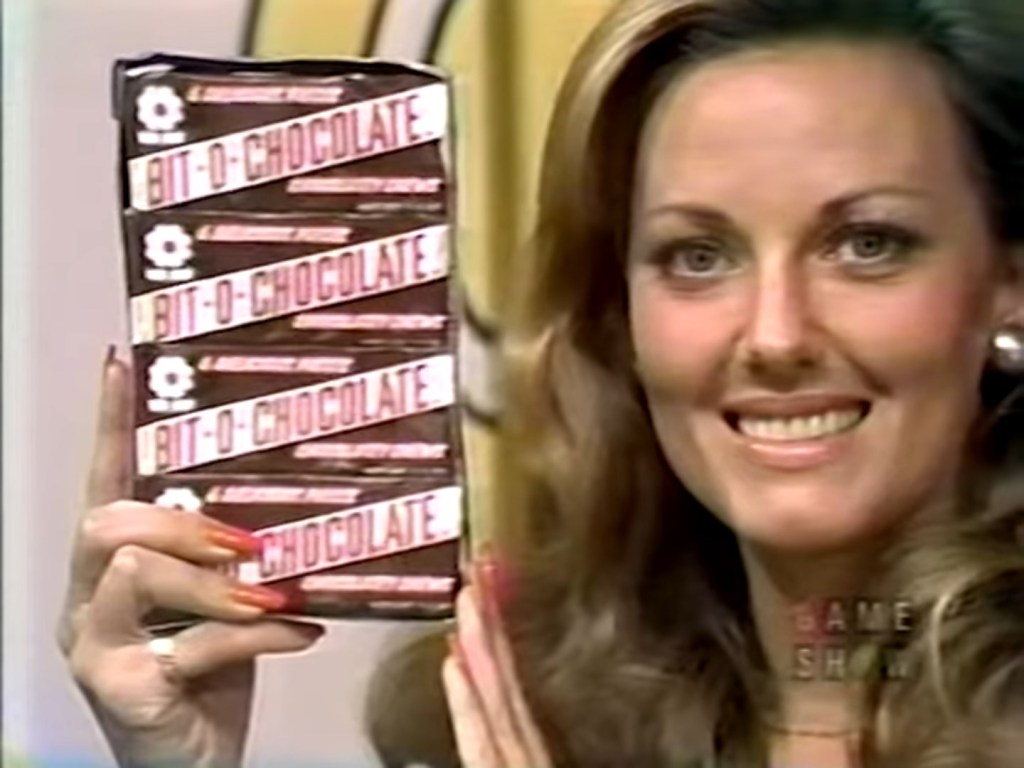
Showcases could include anything and everything. This showcase begins with 12 Bit-O-Chocolate Bars! 
Poor Jenny became the first-ever one-up victim after Sue ruthlessly bid $150! 
Early car setups could be tough. This only has a $52 spread between the highest and lowest options! 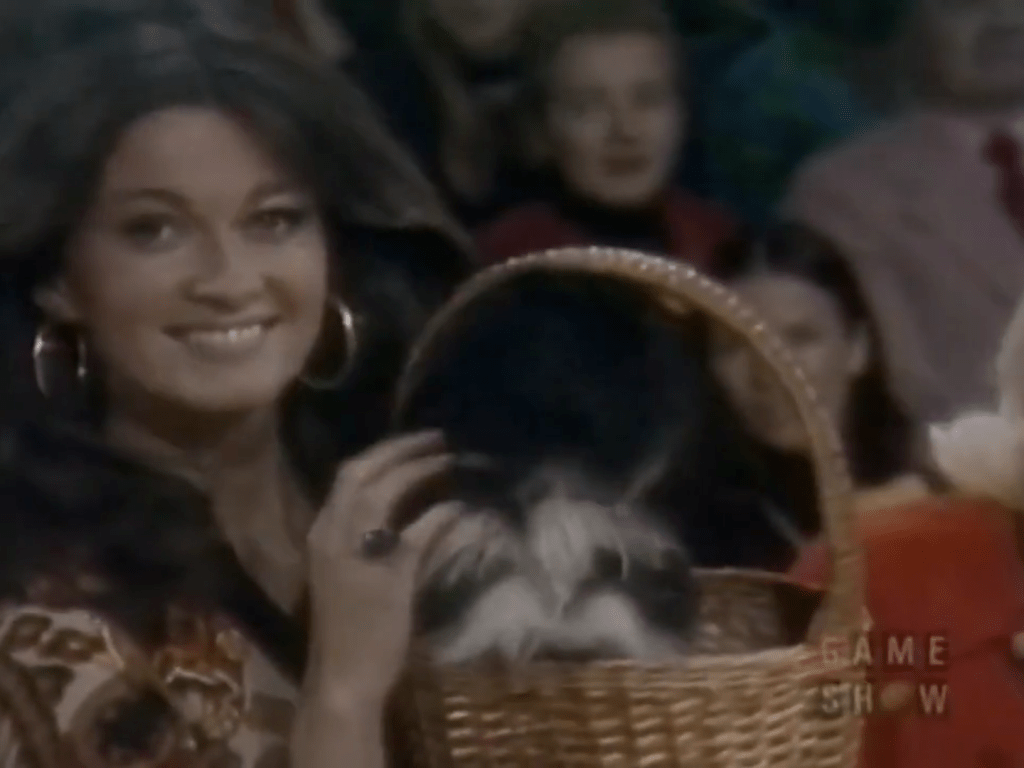
A live puppy was offered as an IUFB! 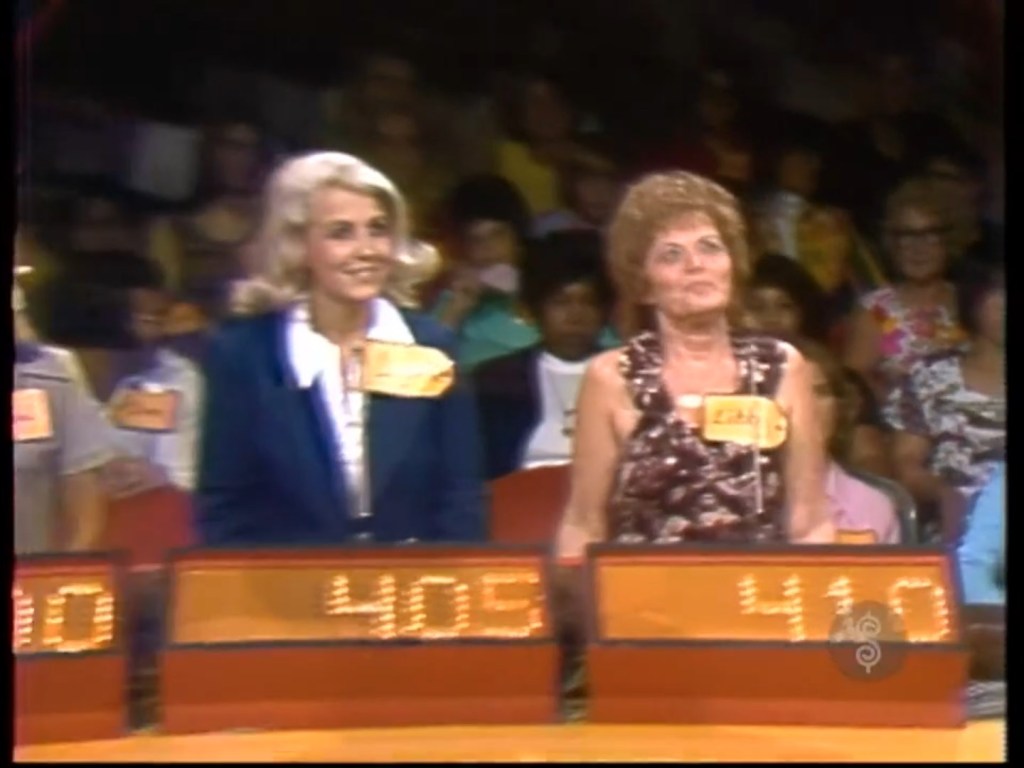
Originally, there was no rule preventing contestants from switching podiums during the show. You can see Libby bid $5 over Lynne here… 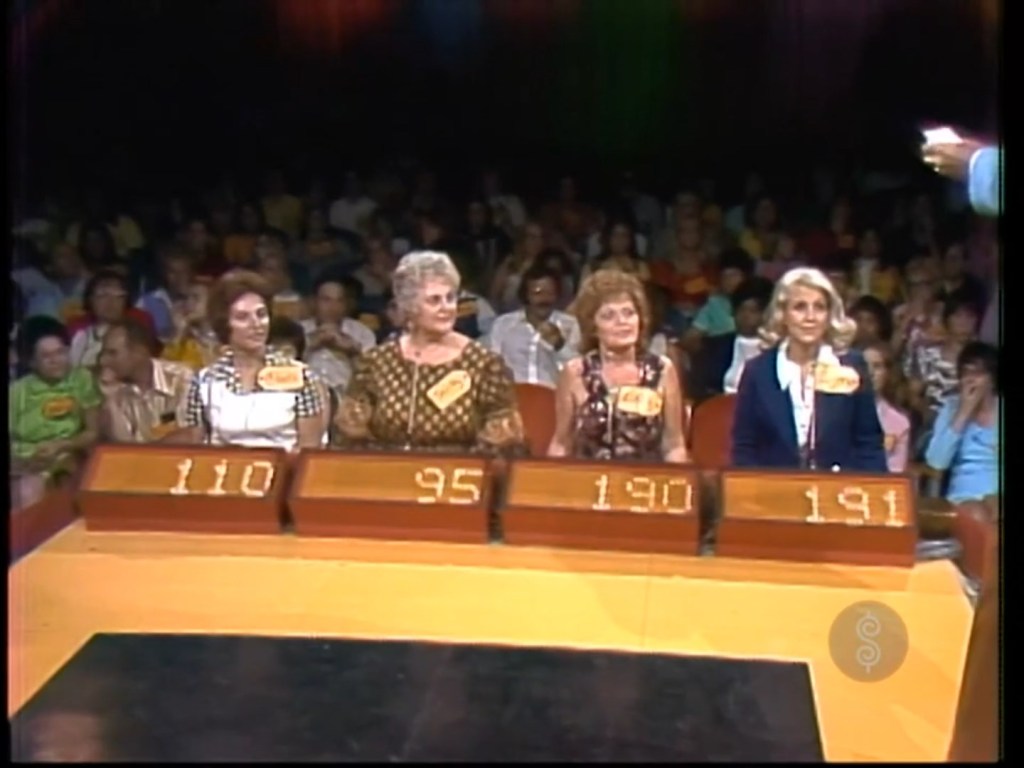
…but after the break, Lynne took her podium and 1-upped her right back! 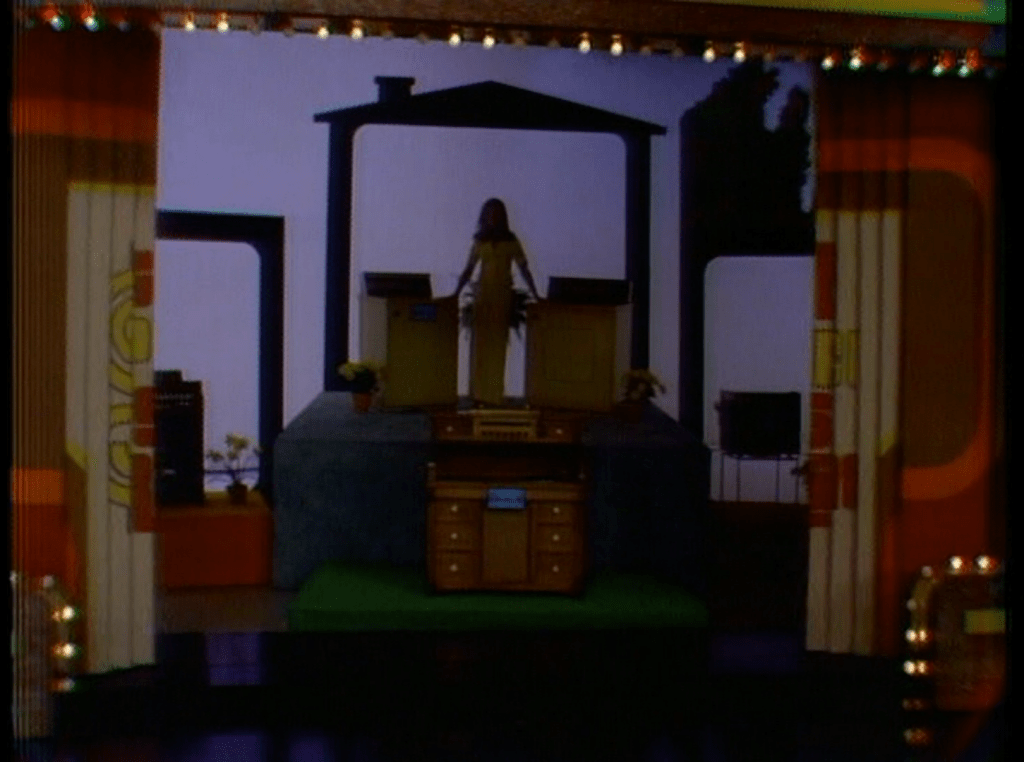
Most of the first season’s showcases were played “straight”, but just before Season 2 the long-running “Every Room in the House” showcase theme was introduced. It always began with the lights darkened & the prizes in silhouette.
New games:
Games retired:
- Bullseye (1972)
- Double Bullseye
- Double Digits
Season 2 – Sep 1973 to Aug 1974
| Oil Crisis… | Mercury Comet: $3,269 |
| Nixon resigns… | 25″ Color TV: $650 |
| “The Godfather Part II” wins Best Picture… | Caesar Salad Dressing: 59¢ |
Season 2 continued right where Season 1 left off. It was clear the format established in the first season was working well, and it made a fine half-hour pairing with Match Game ’73. The show continued to undergo minor tweaks, but nobody seemed to want to mess too much with success.
The first showcase skits appeared this season to spice up their presentation.
Midway through the season, Double Showcase Bid rule was introduced to add some intrigue (and to encourage viewers to watch the end of the episode and into Match Game). If the winning contestant’s bid is less than $100 away from their showcase price, they win both showcases as a bonus!
Contestant Hall of Fame


Memorable Moments
Due to Bob’s refusal to rerun episodes with furs as prizes, much of Season 2 has not been rerun, and we have few photos to document them. But we do know the following events happened:
A contestant reportedly hit a perfect bid in the showcase.
The first “April Fools” showcase is introduced. The contestant was asked to bid on cheap items such as paper plates and an eggbeater. After the prank was revealed, the actual showcase ended up being a luxury car.
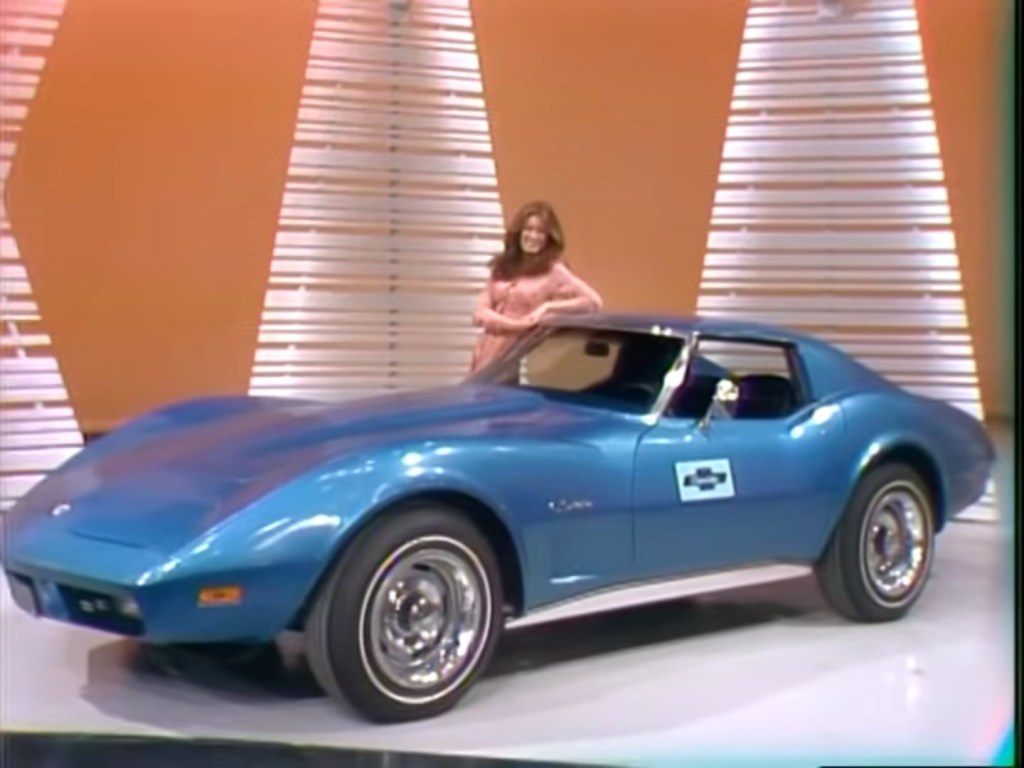
A cool Corvette Stingray! Worth over $6,000! 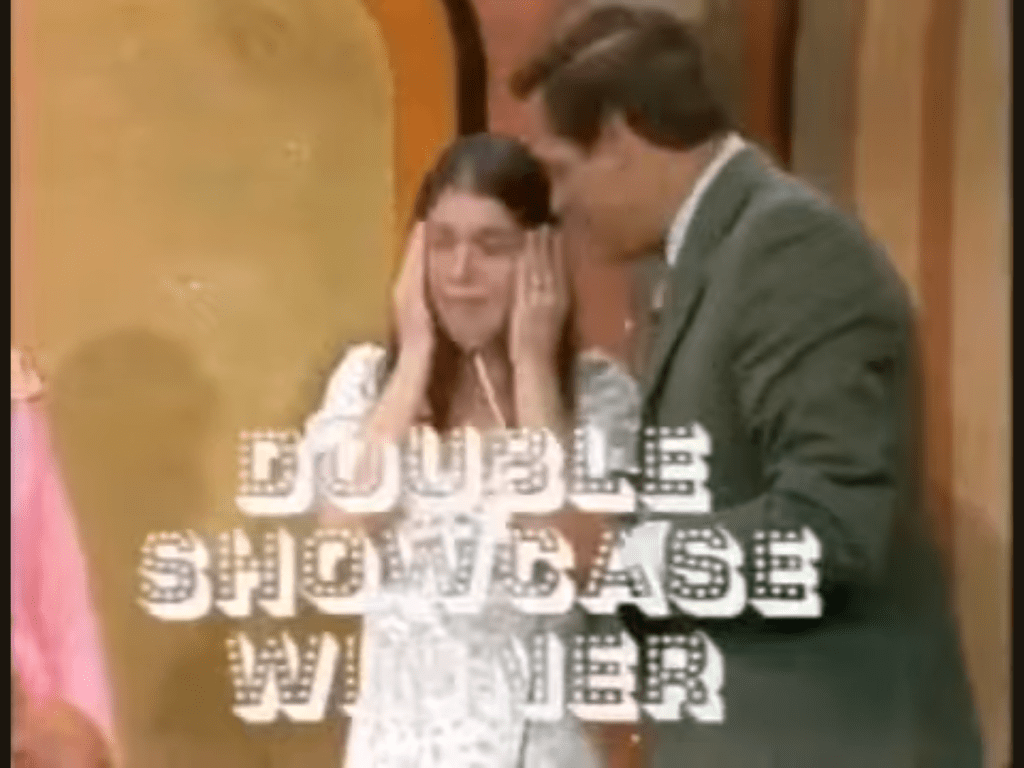
Vicki was only $68 away from her showcase, meaning she won both! 
The original showcases were a collection of prizes large and small, bound by some theme, but before long… 
…they began building showcases around recurring skits, such as Anitra’s elevator tour through “The Price is Right Department Store!” 
Don’t touch that dial! We’ll be lowering Anitra into this showcase on a fly wire! ARE YOU NOT ENTERTAINED? 
A professional magician appeared in that same showcase skits, to entice viewers to stay to the end of the show. 
Showcases could be longer and more elaborate. This showcase contains 500 Silver Dollars. 
Like many other game shows at the time, prizes were furnished by the Spiegel Catalog Company in exchange for a plug.
New games:
Games retired:
Season 3 – Sep 1974 to Aug 1975
| Heiress Patty Hearst jailed… | AMC Gremlin: $3,273 |
| Dungeons and Dragons 1st edition releases… | 23″ Color TV: $560 |
| “Jaws” launches Spielberg’s career… | Lava Lite Lamp: $30 |
At this time, the show aired new episodes year round, so there was little difference between the final episodes of Season 2 and the first episodes of Season 3.


As with Season 2, many of Season 3’s episodes have not been rerun since its original airing due to the number of fur coats offered as prizes. From the episodes we do have, it seems quite similar in style and substance to Season 1 and Season 2.
Dian Parkinson is notably introduced as a substitute model filling in for a sick Anitra. She wouldn’t permanently join the show until a year later, when the show’s needs expanded to require three models.
Contestant Hall of Fame


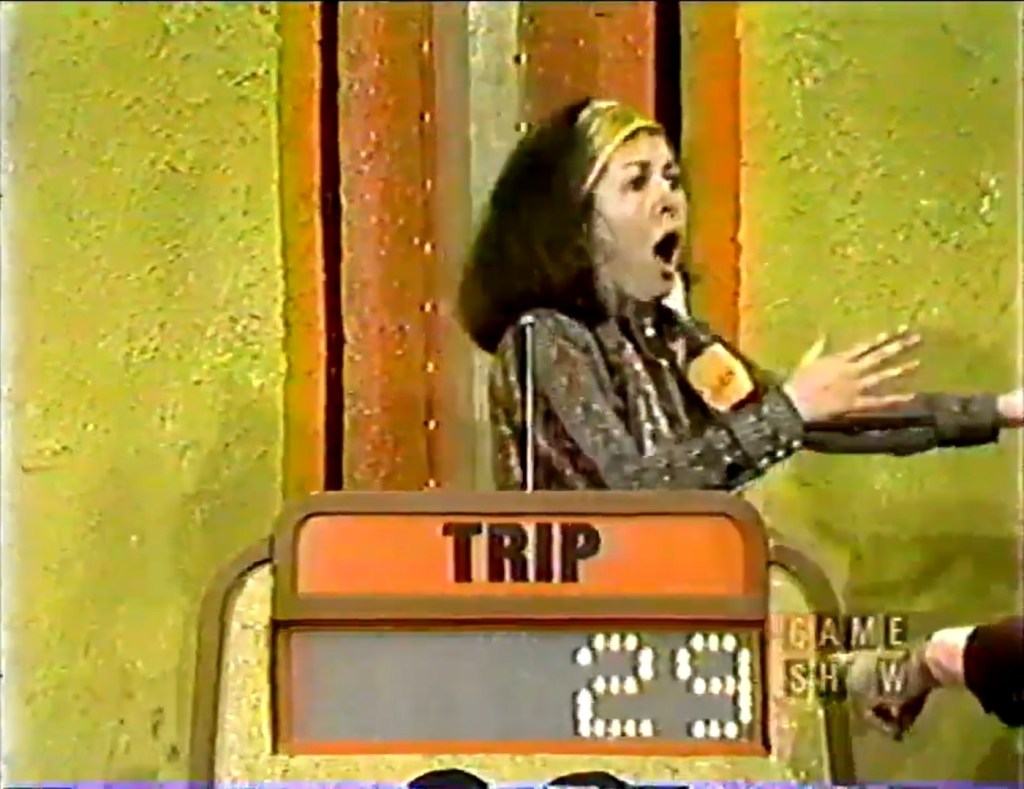
Memorable Moments

The earliest pricing games debuted without their names on their sets… by this point, most of them had them added. 
Producer Jay Wolpert makes it on camera after Bob asks for a pie to throw at a contestant who recognized Bob from “Truth or Consequences”. 
Some of Mark Breslow’s trademark creative directing started appearing. Here the contestant’s head appears inside a fortune teller’s crystal ball as prizes appear. 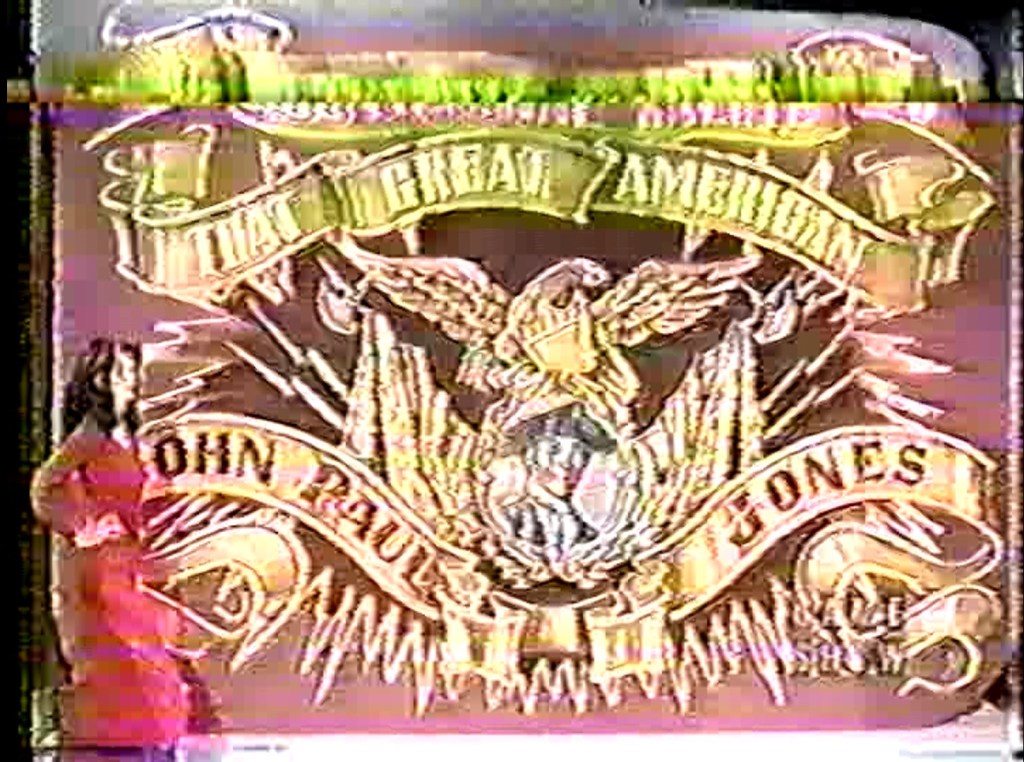
This showcase contains prizes revealed during the bicentennial salute to John Paul Jones. 
The “Do It Yourself” showcase theme was unique, but short lived. Nine possible prizes were prepared, and the contestant got to choose three of them at random to make up their showcase. 
For example, in the “Beaches” category, the three envelopes contain trips to either the Riviera, Acapulco, or Tahiti. The contestant picks envelope 3, hoping it’s Tahiti… 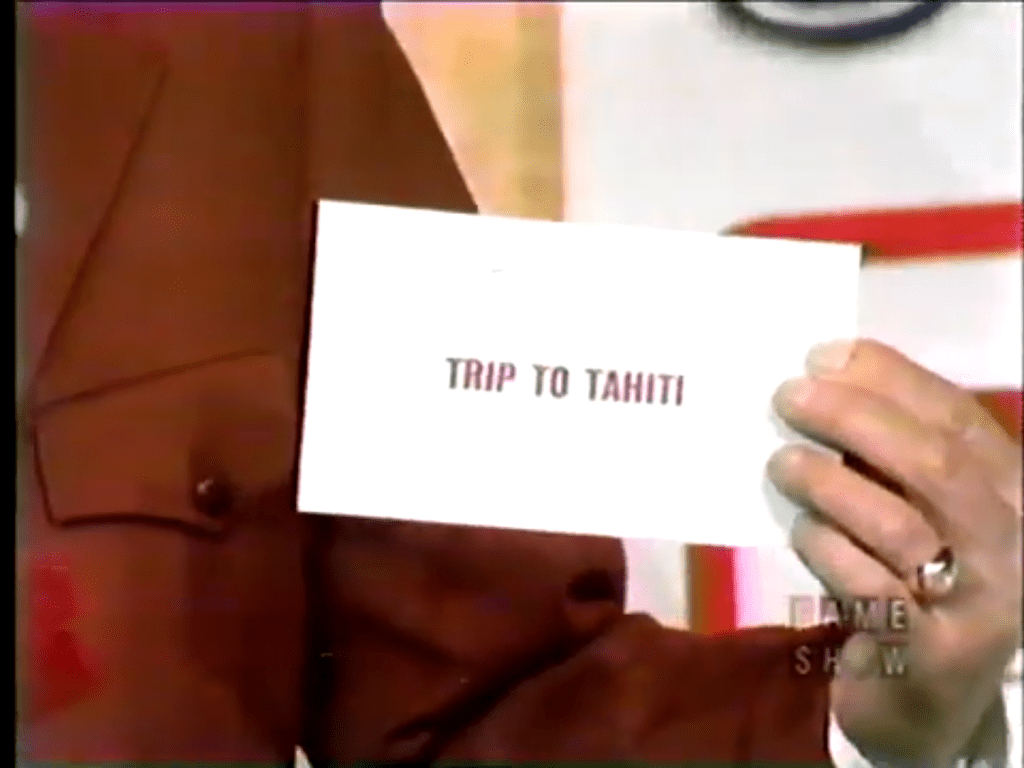
…and it is! 
“Transportation” could have contained a canoe, a motorcycle, or a car. The contestant picked Prize #3, which ended up being the motorcycle. 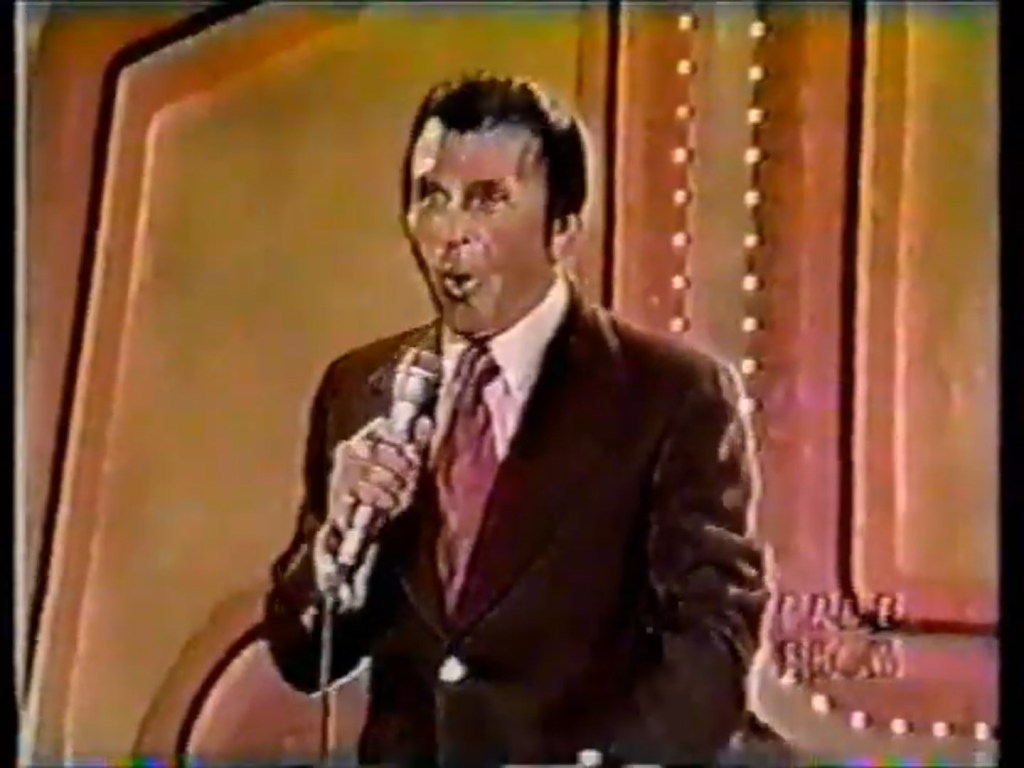
Bob Barker was sick during Christmas Week 1974, so Dennis James pinch hit for him. These days, if the host is sick, tapings are postponed. 
If you win this showcase, you’ll not only win this 1975 Toyota Corolla… 
…AND this Jaguar XK-E convertible… 
…but this lion cub, newly born at the zoo, would be named in honor of the showcase winner!
By the third season’s end, with official renewal for a fourth, the set received a major overhaul. When TPIR premiered, the majority of viewers were watching in black and white, but color TVs had become more common and TPIR’s brown set was looking drab compared to the competition.
New games:
Games retired: None
A new set was not the only investment CBS made into the now three-year-old show. The Price is Right was not CBS daytime’s most successful half-hour (that would be Match Game, which followed Price on most CBS stations), but it was still a runaway hit and all parties were pleased with its success. In fact, CBS was so pleased, they were prepared to double down.
In preparations for the next season, August saw TPIR pulled from its 3 PM block back to its 10:30 AM timeslot. CBS and Goodson-Todman were prepared to try a major experiment for TPIR’s fourth season in daytime.
Could Price remain competitive and hold audience’s attention over two timeslots? What if… The Price is Right became the first-ever hourlong game show in history?
Dennis James’ Syndicated Price is Right – 1972-1977

Though these days Bob Barker is far more well-associated with The Price is Right, Dennis James did have a successful run on his syndicated nighttime version. Once a week, stations who picked up the show saw Dennis James walk through the doors for a special nighttime version of the show.
The Dennis James version was actually intended as the flagship vehicle of The New Price is Right for its first few years. As opposed to the audience of mostly housewives watching the daytime show, Dennis’ nighttime show was given weekly primetime timeslots, when the entire family was home.
Dennis was an old-school TV pioneer, having hosted TV’s first game show on the DuMont network in 1948 and having stayed busy with other games and sports broadcasts since. He was tapped for the job after Bill Todman tuned into him filling in for Monty Hall on “Let’s Make a Deal” and was impressed by how he was able to master both hosting a series of complex, ever-changing games and interacting with contestants who were plucked straight from the audience.
The biggest difference between Bob and Dennis? While Bob endeavored to look smooth and relaxed in everything he did, Dennis brought an extra helping of nervous energy to the proceedings. If Bob was a benevolent god bestowing prizes upon his guests, Dennis ran the show like a manic traffic cop trying to steer contestants away from danger.
Dennis also spent much less time getting to know contestants than Bob did, rushing to the games as fast as possible, which may have been an unfavorable point of comparison to viewers. It also had a smaller pool of games than the daytime show.
But the airtime saved in the first three segments went to the end of the show to allow Johnny to describe the lavish prizes and more elaborate showcases that the larger budget allowed. The average daytime showcase around this time was from $2,000 to $4,000, but it wasn’t unusual to see showcases on the nighttime version worth $7,000 to $11,000!
Much of Dennis James’ run has never been rerun due to fur coats being included amongst the extravagant prizes. Game show historian Adam Nedeff reports that both versions had ticket requests backed up for two years, and Dennis believed that the success was because viewers thought they might get something nice if they made the trek out to Television City. At least one airplane was offered and won!

Memorable Moments
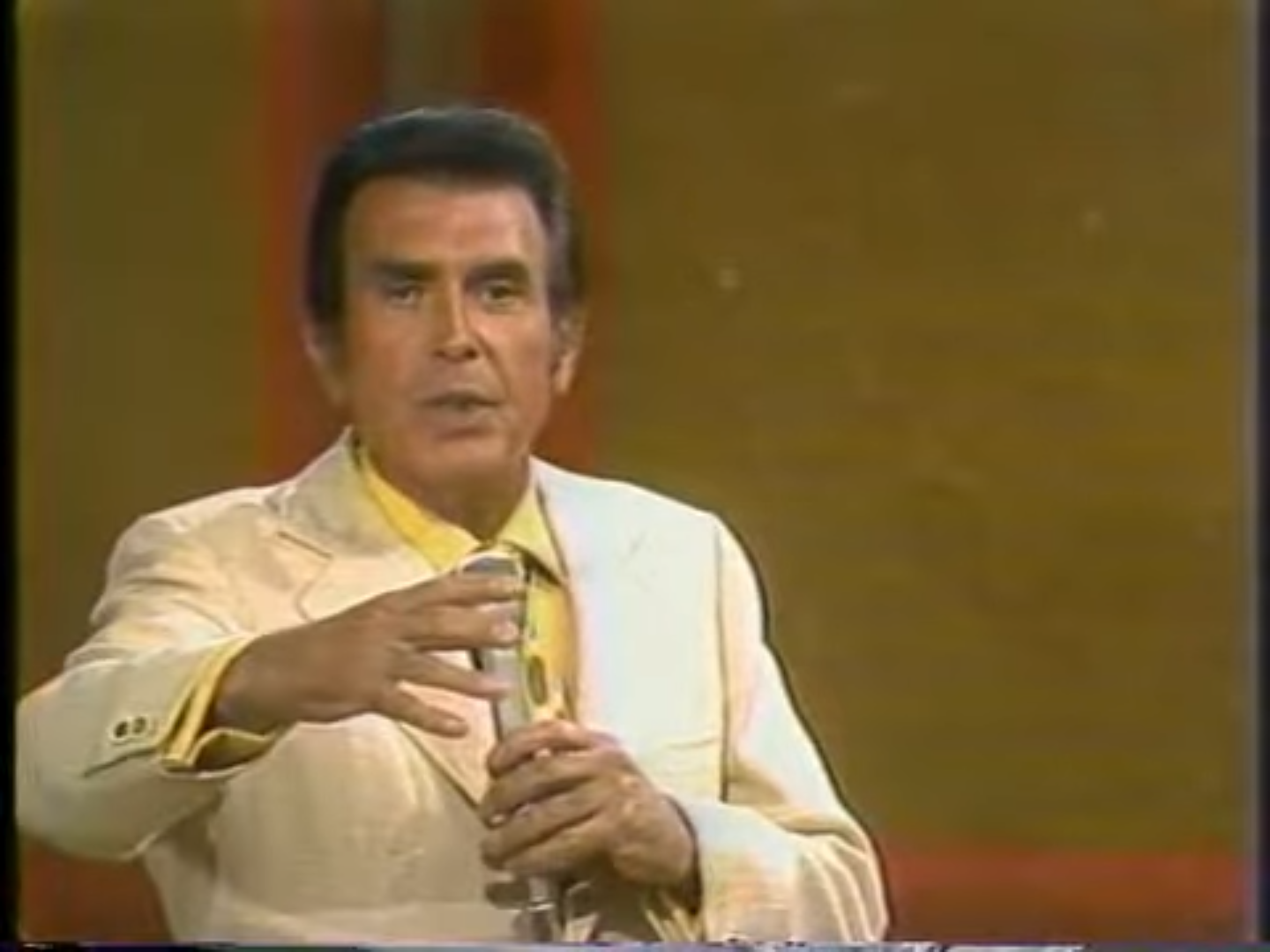
Dennis calling the entire family to come to the television and see how The New Price is Right is played. 
The first Item Up for Bids? It’s a PONY! 
Producer Frank Wayne saved his most elaborate sketch ideas for the nighttime show. This showcase sees Janice’s magic lamp summoning Genie Johnny! 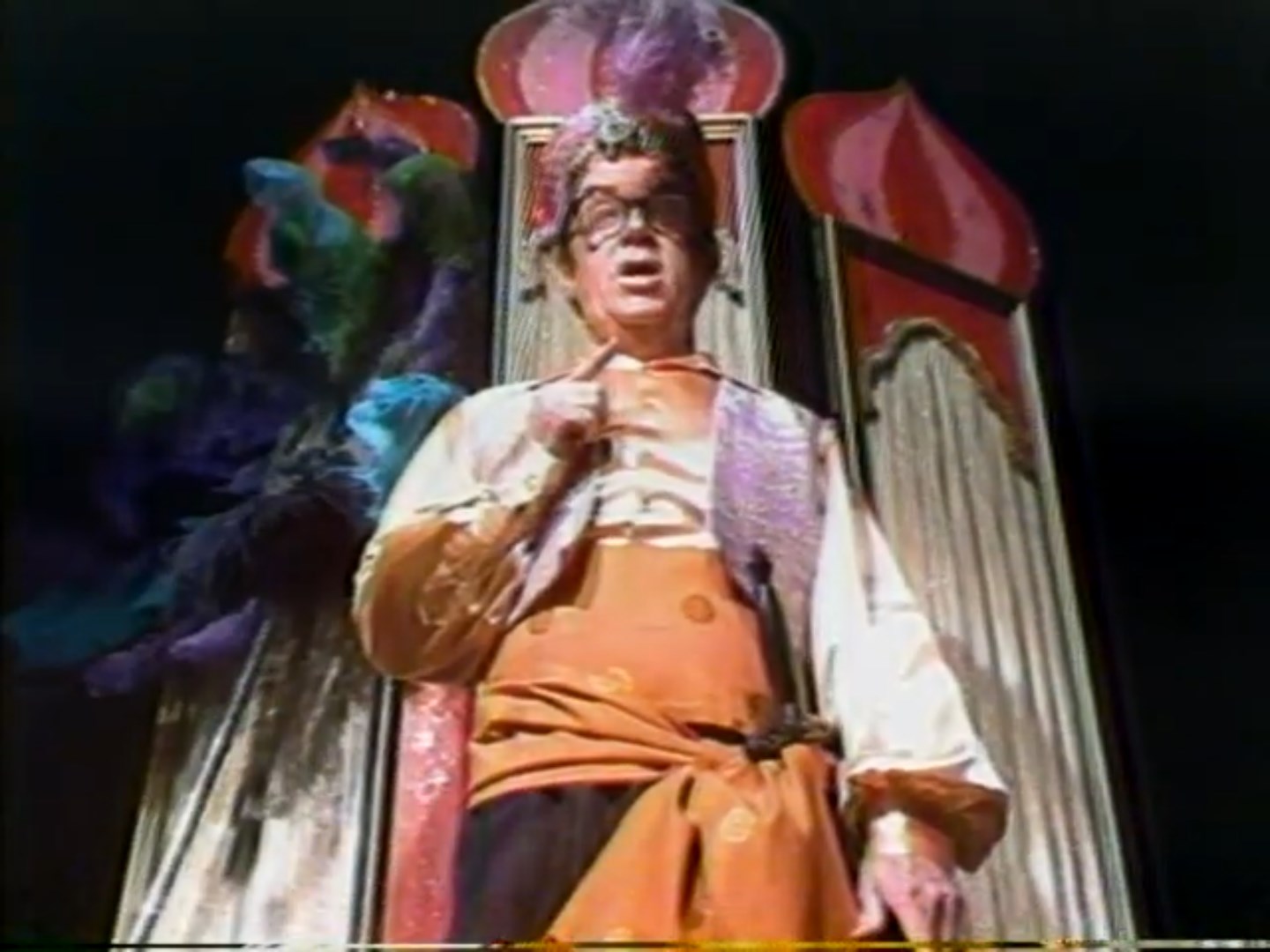
Camera angles and green screen were used to make Genie Johnny seem enormous as he grants Janice’s three wishes… 
And by the end, Genie Johnny’s wish of his own is fulfilled! 
Not to be outdone, the other showcase begins with a French-English dictionary… 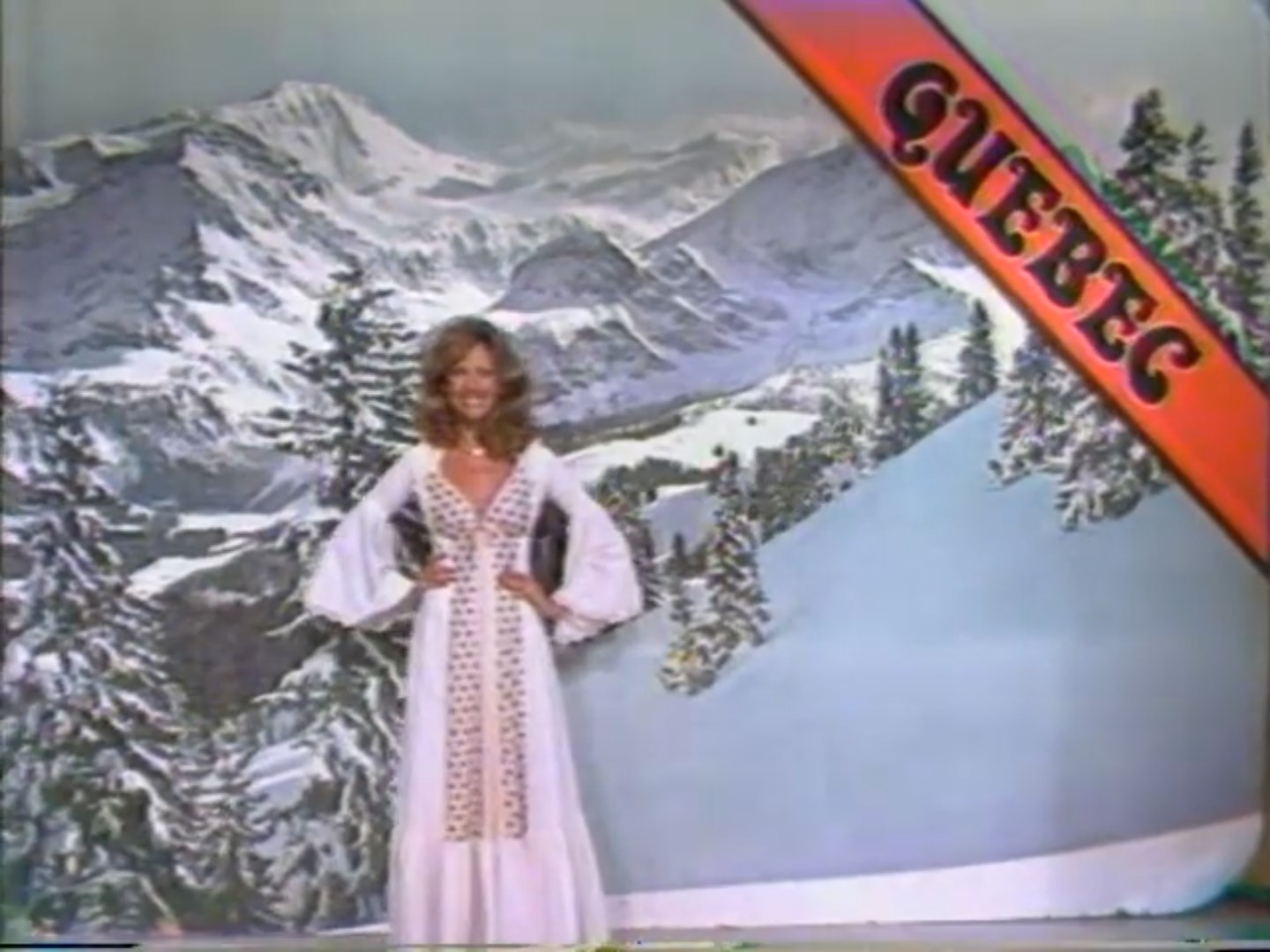
…which could be used on your trip to Quebec! 
…AND your trip to Paris! 
…AND, now that you’re conversant in French, you’re also going to Haiti! 
Still not enough? Let’s throw Tahiti in there as well! Four trips in one showcase, plus 1000 francs! 
Think you can handle nervous energy? Wait til you see Dennis James host the Clock Game! He bellows HIGHER and LOWER like the contestant’s life depends on it! 
This contestant won an AIRPLANE in 1976. ARP of her showcase? Nearly $20,000! She sold it to pay for her first home.
Dennis did a fine job in a very difficult role, but he was concerned about being compared to Bob Barker, who was getting five times as much practice and airtime every week as Dennis was. Dennis was very much seen as the “old guard” of television compared to younger, more flexible hosts.
By the end of Dennis’ five-year contract, the daytime show had expanded to an hour and seen tremendous success for CBS. The daytime show’s success had started to cut into to the syndicated version, and NBC stations elected not to renew the show.
Goodson shopped the syndicated version to CBS stations, who agreed to pick it up, but requested that Bob Barker step in as host replacing Dennis. The New Price is Right would be Dennis James’ final game show, though he would remain active hosting telethons for the United Cerebral Palsy Association.
The syndicated show ran another three seasons under Bob’s tenure before being canceled in 1980.
Go on to
- See The Price is Right expanding to Hour Power in the Late 70s
- Go back to the Tiny Timeline
 Golden-Gallery.net